

The EFF's Insourcing Bill 2025 is a transformative law that will bring essential government services back in-house — ending decades of corruption through outsourcing, stopping the exploitation of workers, and ensuring every rand of public money serves the people of South Africa.
A Law That Works For Workers
Since 1994, South Africa's government has outsourced essential services to private companies. The result? Inflated contracts, rampant corruption, and millions of workers exploited with no benefits, no job security, and wages that are a fraction of what government actually pays.
The Insourcing Bill, 2025 — introduced by EFF Treasurer General Omphile Maotwe, MP — provides a comprehensive legislative framework requiring organs of state to bring these services back in-house, using their own employees, under proper oversight and accountability.
"The presentation of the Insourcing Bill to Parliament marks the formal engagement of a Bill that seeks to fundamentally restructure how the state procures and delivers essential services on a continuous and long-term basis."
— EFF Statement, 4 March 2026
Bill Reference
Insourcing Bill [B 19—2025] · Introduced as a Section 76 Bill · Presented to the Portfolio Committee on Public Service and Administration · ISBN 978-1-4850-1034-0
Where Your Money Is Going
Government departments pay outsourcing companies top rates — but workers see a fraction of it. The rest disappears into contractor profits. Here's what the numbers reveal.
per month by government
actually takes home
per month
contributions withheld
deductions not paid over
for defrauding workers
“The Economic Freedom Fighters (EFF) welcomes the formal introduction of the Insourcing Bill by the EFF in the National Assembly as a Private Member’s Bill, tabled by the Treasurer General, Commissar Omphile Maotwe. The purpose of this Bill is to compel the state, across all levels and entities, to insource essential and regularly required services.”
This Is What Outsourcing Looks Like
These are not isolated events. They are the predictable outcome of a broken system — a system the Insourcing Bill is designed to fix.
Security guards and cleaners stormed municipal offices after being left unpaid for months — despite the municipality having an outsourced contract with a private company in place. Government paid. Workers went without.
Security guards downed tools after two months without pay, leaving staff and patients at risk at one of Gauteng's busiest hospitals. Lives were endangered because a contractor pocketed public money.
More than 70 guards blocked a customer care centre over repeated late salaries and unpaid bonuses. The state had paid the contractor in full. The workers saw nothing. The state pays; the contractor profits.
Unions exposed a systematic pattern of 41 security companies deducting R13 million per month from workers for UIF contributions that were never paid to SARS. Workers faced legal liability for their employers' fraud.
Make Your Voice Count
Register To Vote & Back the Liquor Amendment Bill
What the Bill Does
The Insourcing Bill creates a binding legal framework. Not guidelines. Not suggestions. Legally enforceable obligations on every organ of state in South Africa.
The Minister must develop a national insourcing policy that promotes job security, fair labour practices, and limits outsourcing. All organs of state must implement it — no exceptions without justification.
Workers providing recurring services to government must be employed directly by the state — securing benefits, stable wages, UIF, pension, and medical aid. No more middlemen stripping their earnings.
Every organ of state must conduct annual skills audits and maintain a database of employee capabilities. Before outsourcing, they must first check if an existing employee can perform the service.
Where outsourcing is unavoidable, the private contractor must train a state employee to perform that service. Training value must equal a prescribed percentage of the contract value — building capacity permanently.
Accounting officers must submit quarterly reports to the Minister on every outsourced service, the reasons it could not be insourced, and the steps being taken to bring it in-house — full transparency.
The Minister must table an annual report in the National Assembly on the progress of insourcing across all government departments, ensuring democratic oversight and public accountability.
Services Covered by the Law
The Bill mandates insourcing across the full spectrum of recurring government service needs — with the Minister able to expand the list by regulation.
How Insourcing Works
A clear, accountable process replacing the broken tender-outsource cycle.
Before any outsourcing, the state must check its own database of employee skills to see if the service can be delivered in-house.
Where an employee has the skill and is available, they are deployed to deliver the service — even if it's outside their core functions.
If outsourcing is truly unavoidable, the accounting officer must formally confirm this in writing, with reasons, before proceeding.
Any contractor hired must train a state employee to perform that service — building permanent government capacity with every contract.
Your Vote Makes This Law
The Insourcing Bill will not pass itself. It requires political will — and political will starts with the ballot. Every municipality where the EFF gains power is a municipality where workers will be employed directly by the state, paid fairly, with benefits, on time.
The ANC created this outsourcing system. The DA protects it. The EFF is the only party that has introduced legislation to end it — because we serve workers, not contractors.
In the 2026 Local Government Elections, voting EFF means voting for the Insourcing Bill. It means voting for the security guard who hasn't been paid in two months. It means voting for the cleaner whose provident fund was stolen. It means voting for accountability over corruption.
Key Facts
-
Bill Status Presented to Portfolio Committee on Public Service & Administration, 4 March 2026
-
Type of Bill Section 76 — requires both National Assembly and NCOP approval
-
Introduced By MS OMC Maotwe, MP — EFF Treasurer General [B 19—2025]
-
Who Benefits Every security guard, cleaner, catering worker and public servant employed through outsourcing
-
Register to Vote registertovoteeff.org.za — ensure you are on the voters roll for 2026
Register.
Vote EFF.
Win.
The Insourcing Bill is ready. Workers are ready. Now we need your vote to make it law. Register today — every vote is a vote to end exploitation.
Register to Vote NowCampaigns

The Electoral Matters Amendment
Download & Read The Electoral Matters Amendment Bill The Economic Freedom Fighters (EFF) calls on all South Africans to submit...
Read More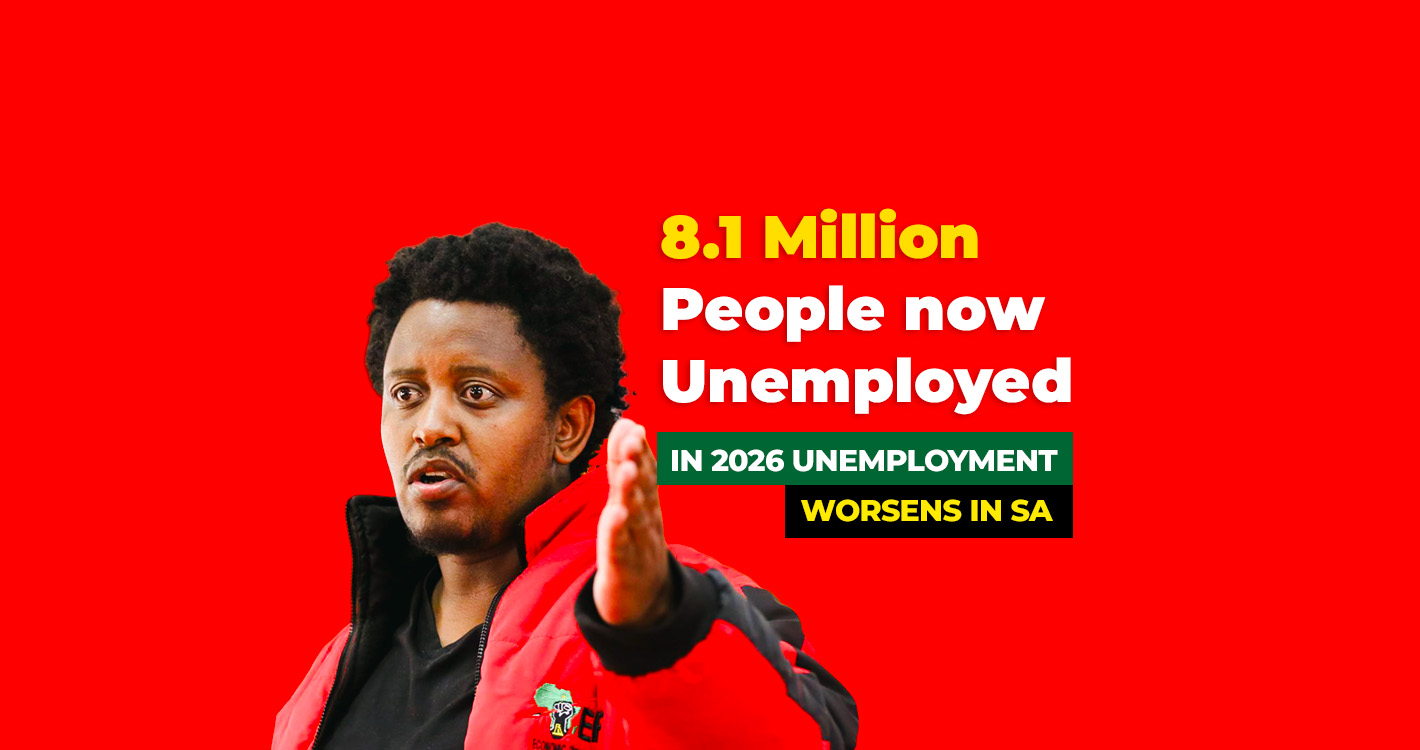
South Africa lost 345,000
South Africa lost 345,000 jobs in just three months, pushing the official unemployment rate to 32.7%. More than 8.1 million...
Read More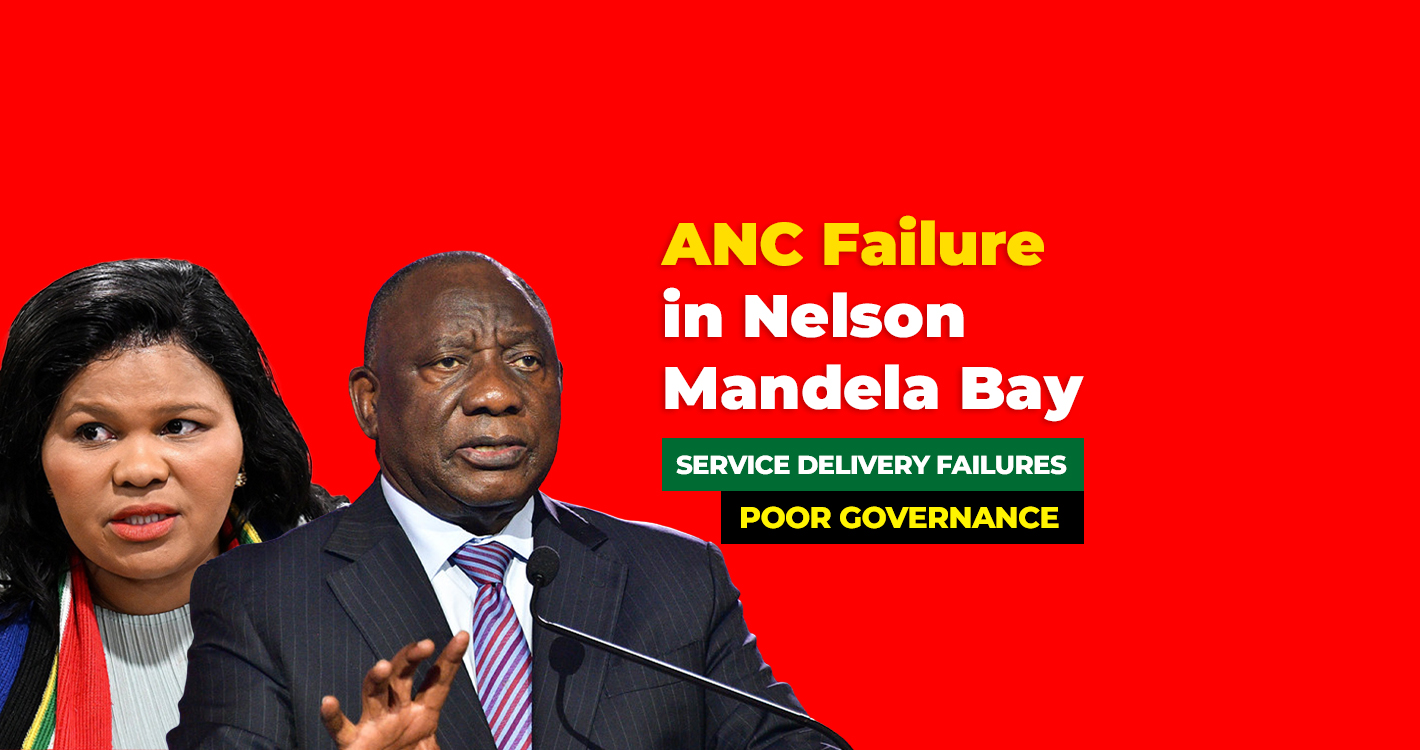
EFF Slams Ramaphosa for
While residents face water outages, collapsing infrastructure and poor governance, national leadership praises a metro in crisis. This is not...
Read More